

Fittonia Albivenis: Getting to Know the Nerve Plant

'If you think I’m just a pretty face, wait until you see me in the right light… and humidity!'
Who are you and where do you come from?
I'm Fittonia albivenis, though most people know me as the nerve plant, and some call me the mosaic plant if they're feeling artsy. My name comes from my most striking feature: the intricate network of white, pink, or red veins that crisscross my leaves like delicate lace. I'm a proud native of the tropical rainforests of Peru, where I grow beneath the canopy of tall trees, soaking up gentle shade, constant humidity, and warm temperatures year-round. In short, I'm a true rainforest diva.

Fittonia plant comes in few different colours; Pink, White and Red.
How would you describe yourself?
Small but mighty. I'm not tall or sprawling, but I know how to make an entrance. My leaves are my crown jewels, each one a tiny work of art. I'm soft, tactile, and perfectly sized for life in a terrarium. I like to think I bring a touch of elegance to any plant arrangement. I also play nicely with companions like moss, miniature ferns, and even decorative figurines if you like to decorate, making me one of the most popular terrarium plants around.
What makes you an easy plant?
I'm really not demanding, as long as you set me up in the right environment. Put me in a terrarium, and I'll stay hydrated and happy with very little fuss. In an open pot, I appreciate a drink when my topsoil feels slightly dry, but please don't drown me as I prefer a light mist over a flood. As a shade-loving plant, I thrive in indirect light, so a bright windowsill with filtered sunshine is my idea of paradise. No direct sun, ever, my leaves will thank you for it.

A mini ready-made terrarium with a colourful Fittonia growing among soft moss in a hand-blown glass jar with a cork lid.
Unless.. what?
Unless you forget about humidity. I'm a tropical plant through and through, used to warm, moist rainforest air, so very dry indoor rooms make me a bit cranky. If I'm unhappy, I'll let you know: my leaves may curl or droop dramatically (yes, I can be a little theatrical). But don't worry, I bounce back quickly once conditions improve. Think of me as your built-in air-quality indicator.
Fittonia albivenis at a glance
| Light | 🌤 | Indirect / filtered light. No direct sun |
| Watering | 💧 | Open pots: when topsoil feels slightly dry |
| Humidity | 🌿 | High, terrariums ideal, or mist in open pots |
| Temperature | 🌡 | 18–26°C, no cold drafts |
| Soil | 🪴 | Well-draining, peat-based mix |
| Pet-safe | 🐾 | ✔ Yes, pet friendly |
| Difficulty | ⭐ | ✦ Easy in terrarium / Moderate in open pot |
Do you have any other quirks?
Oh, I'm full of them. For one, I'm quite expressive in plant language, my leaves stand tall and perky when I'm content, or flatten and sag when something's off. I'm also completely pet-safe, which means your cat or dog can admire me without any vet visits (though I'd rather they didn't chew on me, thanks). And here's a little secret: my leaf colours often look more vibrant when I'm surrounded by lush green companions. I love a crowd, the more, the merrier.

What do you love most about living in a terrarium?
Everything! A terrarium is like my own private spa retreat, stable humidity, cosy surroundings, no harsh drafts, and no dramatic temperature swings. The glass walls keep my little world calm and my leaves perfectly hydrated. I get to share the space with friends like moss and baby ferns, and together we create a lush miniature jungle right in your home. Plus, people always stop to admire a terrarium, and I do love an audience.
Are you better suited for an open or closed terrarium?
Closed, without a doubt, and I'll tell you why. In a closed terrarium, the moisture I release is recycled back into the air around me. It's a self-sustaining little world, and honestly, it suits my rainforest soul perfectly. The humidity stays high, the temperature stays stable, and I never have to worry about dry spells. Glass walls are my happy place.

Who are your best companions in a terrarium?
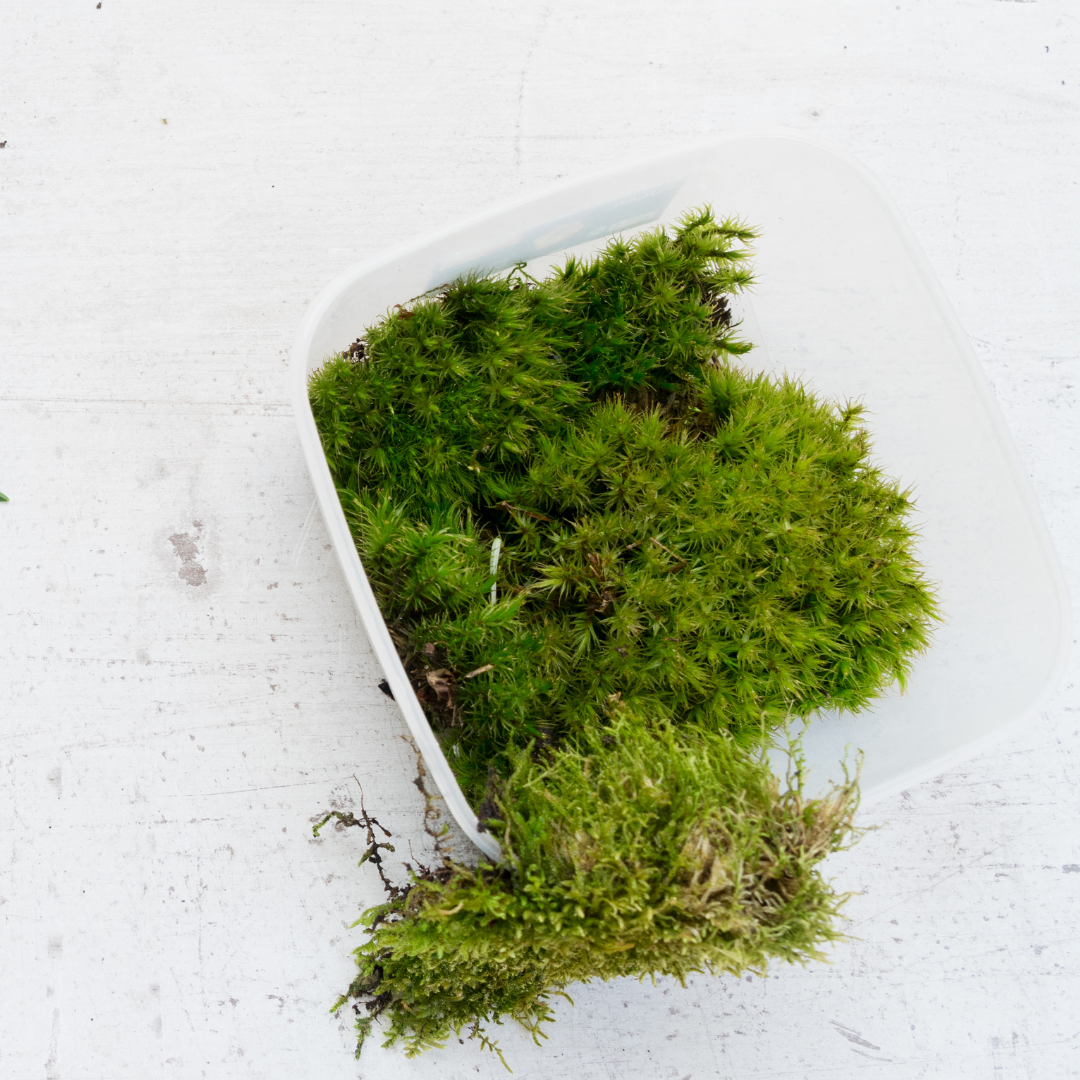
Oh, I'm very sociable. My favourite terrarium flatmates are cushion mosses and sheet mosses. We share the same love of moisture and we look stunning together. Mini ferns are wonderful neighbours too, especially Boston fern if you can find it. Asplenium is another wonderful choice as its bold, arching fronds create a beautiful contrast to my delicate veined leaves. And if you want something low and creeping, Pilea glauca is a dream companion; its tiny silvery-green leaves fill the gaps between us like a living carpet. Just avoid anything that likes it dry or grows too fast and crowds me out. I like community, not competition.

Cushion moss, carpet moss, mini ferns and other humidity-loving plants that make good Fittonia companions in a closed terrarium.
Any advice for your future plant parents?
Yes, think of me as a friend who loves a cosy, humid café, not a dry, sunny beach. Keep me out of direct sun, keep my soil lightly moist, and mist me now and then if I'm growing in an open container or a pot. In return, I'll keep your space looking lush, vibrant, and alive. And remember: I'm a small plant with a big personality. Never underestimate my charm.
Ready to bring Fittonia home?
Whether you're building your first terrarium or adding to an existing collection, Fittonia albivenis is a perfect place to start. Find her in our shop, available on her own or as part of our ready-made terrarium sets and DIY terrarium kits.

A compact nerve plant with deep red veins in an 8.5 cm pot, ideal for terrariums or as a small houseplant.
Frequently Asked Questions - Fittonia albivenis
Is Fittonia albivenis easy to care for?
In a terrarium, yes, it's one of the most beginner-friendly plants you can grow. The enclosed environment maintains the humidity Fittonia needs naturally, so it requires very little intervention. In an open pot, it's moderate: it needs consistent moisture, high humidity, and no direct sunlight. The biggest mistake new owners make is placing it in a dry room or near a radiator.
Why are my Fittonia's leaves curling or drooping?
This is almost always a humidity or watering issue. Fittonia is a rainforest plant, it needs moist air and consistently damp (but never waterlogged) soil. Curling leaves usually signal low humidity; drooping leaves often mean the plant is thirsty or the air is too dry. Move it away from heat sources, mist it, and water lightly. It should recover within a few hours.
Can Fittonia grow in a closed terrarium?
Yes, and it thrives there. A closed terrarium mimics the humid, sheltered conditions of Fittonia's native rainforest habitat in Peru. It's one of the best plants to include in a closed or semi-closed terrarium, alongside mosses, mini ferns, and selaginella.
Is Fittonia safe for cats and dogs?
Yes, Fittonia albivenis is non-toxic and considered pet-safe. It poses no risk to cats or dogs if accidentally chewed or ingested. That said, we'd still recommend keeping your pet's curiosity in check, mostly for the plant's sake.
How often should I water Fittonia?
In an open pot, water when the top layer of soil feels slightly dry, roughly every 5–7 days depending on your home's temperature and humidity. In a closed terrarium, watering is rarely needed as moisture recycles within the enclosure. When in doubt, underwater rather than overwater: Fittonia dislikes soggy roots.




Leave a comment