

How to Water a Closed Terrarium
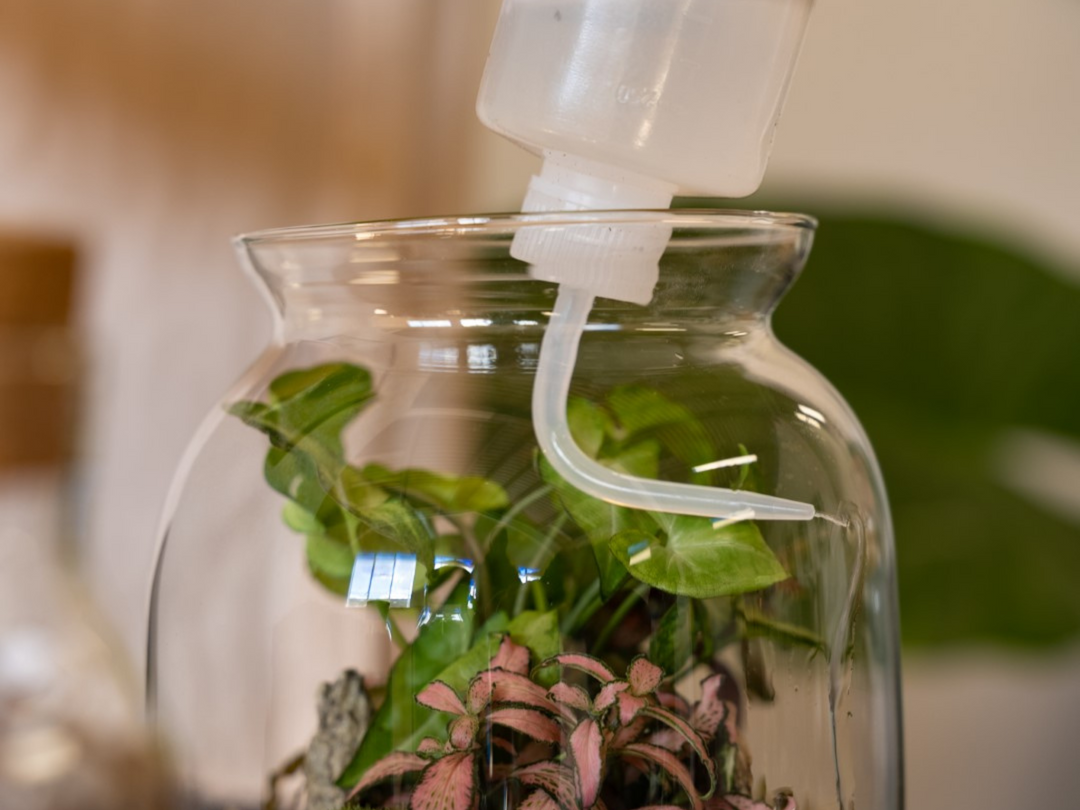
How to water a closed terrarium is one of the most frequently asked questions we get. It is also one of the biggest care worries for new terrarium owners. The good news is that closed terrariums are designed to recycle moisture, so they usually need far less watering than normal houseplants.
In this guide, we will explain how often to water a closed terrarium, how much water to add, what type of water to use, and what to do if your terrarium looks too wet.
Quick answer: how do you water a closed terrarium?
A closed terrarium should not be watered on a fixed weekly schedule. After the first watering, it usually recycles moisture through condensation on the glass. Only add a small amount of filtered or rain water if the moss is drying, the soil looks pale and shrunken, or the plants start to wilt. Always add water slowly, then wait and observe.
How Often Should You Water a Closed Terrarium?
The most important thing to remember is that your closed terrarium is a small ecosystem that goes through its own water cycle. Once you water your terrarium at the beginning, it should not need regular watering in the same way as a normal potted plant. There are, however, a few exceptions, which we will cover below.
In a healthy closed terrarium, water moves through the soil, plants and glass. The plants take up water through their roots, release moisture through their leaves, and that moisture condenses on the inside of the glass before dripping back down into the soil. The cycle then starts again.
This is why closed terrariums are so well known for being low maintenance. The aim is not to water often, but to create the right moisture balance inside the container.

Build your own closed terrarium with the jar, plants, moss, layers and instructions chosen for you.
Shop closed terrarium kitsHow Do You Know If a Closed Terrarium Needs Water?
Even though closed terrariums are self-sustaining ecosystems, they may need to be watered occasionally. The best way to decide is to look at the signs inside the glass, rather than watering by the calendar.
Your closed terrarium may need a small amount of water if:
- The moss starts to lose its fresh green colour and begins to yellow or dry.
- The soil looks very pale, dry or shrunken away from the sides of the glass.
- The plant leaves look crispy, yellowing or wilted.
- You do not see any light condensation or water droplets on the inside of the container for a long time.
A small amount of condensation is normal in a closed terrarium. If the glass is lightly misted at certain times of the day, that usually means the water cycle is working. If the glass is completely clear all the time and the soil looks dry, the terrarium may need a little water.
How Much Water Should You Add to a Closed Terrarium?
There is no single amount that works for every terrarium, because it depends on the size of the glass container, the amount of soil, how many plants are inside, how much moss is used and the conditions in your home.
The golden rule is to add water slowly. It is much easier to add a little more water later than to remove too much water from a sealed glass container.
For a small closed terrarium, start with a very small amount of water and wait to see how the ecosystem responds. A small watering bottle can help you direct water gently around the soil and moss, rather than pouring water straight into the centre.
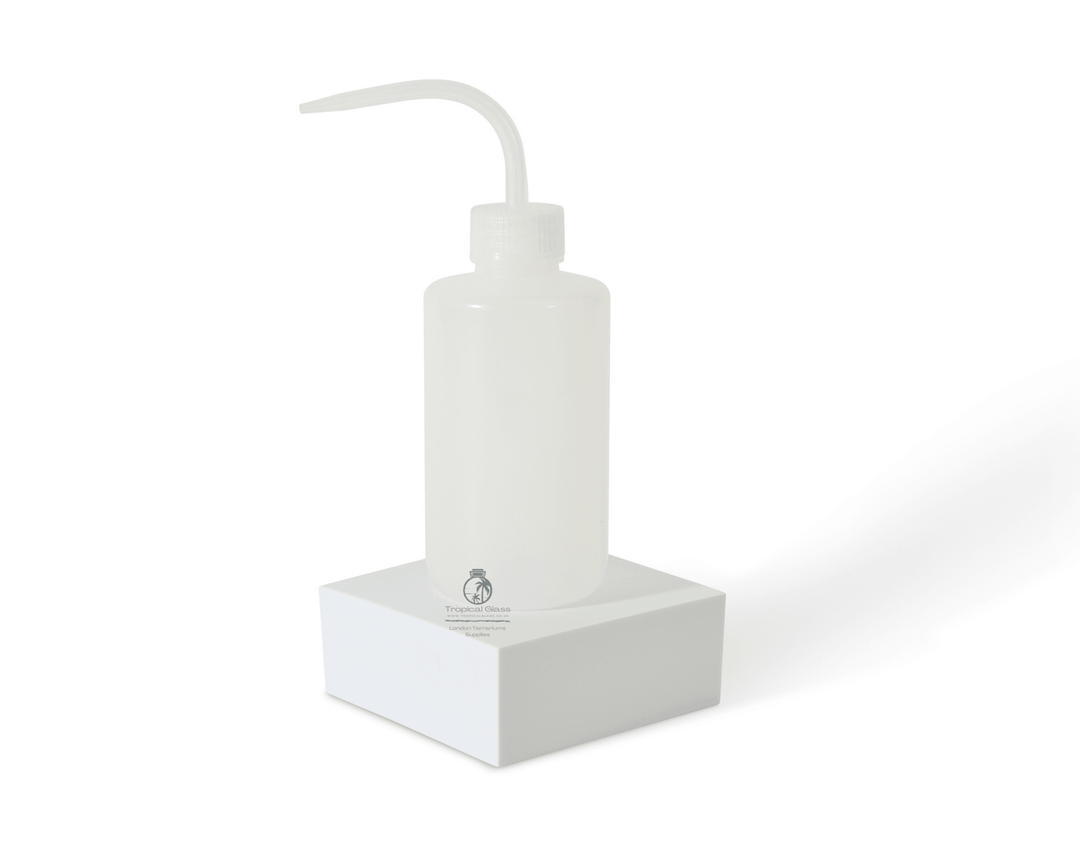
Useful for adding small, controlled amounts of water to terrariums, succulents and houseplants.
Shop watering bottleWhat Type of Water Should You Use?
We always recommend using filtered water or rain water for a closed terrarium. Tap water is not usually harmful to the plants, but it can contain minerals and additives that may leave white streaks or marks on the inside of the glass over time.
Filtered water, rain water or distilled water can help keep the glass clearer and reduce mineral build-up. This is especially helpful in hard water areas.
Can You Overwater a Closed Terrarium?
Yes, and overwatering is one of the most common closed terrarium mistakes. Excess water can collect at the bottom of the glass container and cannot drain away like it would in a normal houseplant pot. This can lead to soggy soil, mould, plant stress and root rot.
Your terrarium may be too wet if:
- The glass is constantly fogged up and you cannot see inside.
- Water is pooling heavily at the bottom of the container.
- The soil looks saturated for days.
- Plants start to rot, collapse or turn mushy.
- You notice a bad smell when the lid is opened.
I Watered My Terrarium Too Much. What Should I Do?
It can happen to any of us. If you have added too much water to a closed terrarium, do not put the lid straight back on. Leave the terrarium open for a few hours, or longer if needed, so excess moisture can evaporate.
You can also gently wipe excess water from the inside of the glass with a piece of kitchen roll wrapped around long tweezers or a terrarium tool. If there is a lot of standing water at the bottom, you may need to absorb some of it carefully with paper towel.
Once the glass is no longer constantly fogged and the soil looks moist rather than wet, place the lid back on and monitor it over the next few days.
Does Moss Help Show If a Terrarium Needs Water?
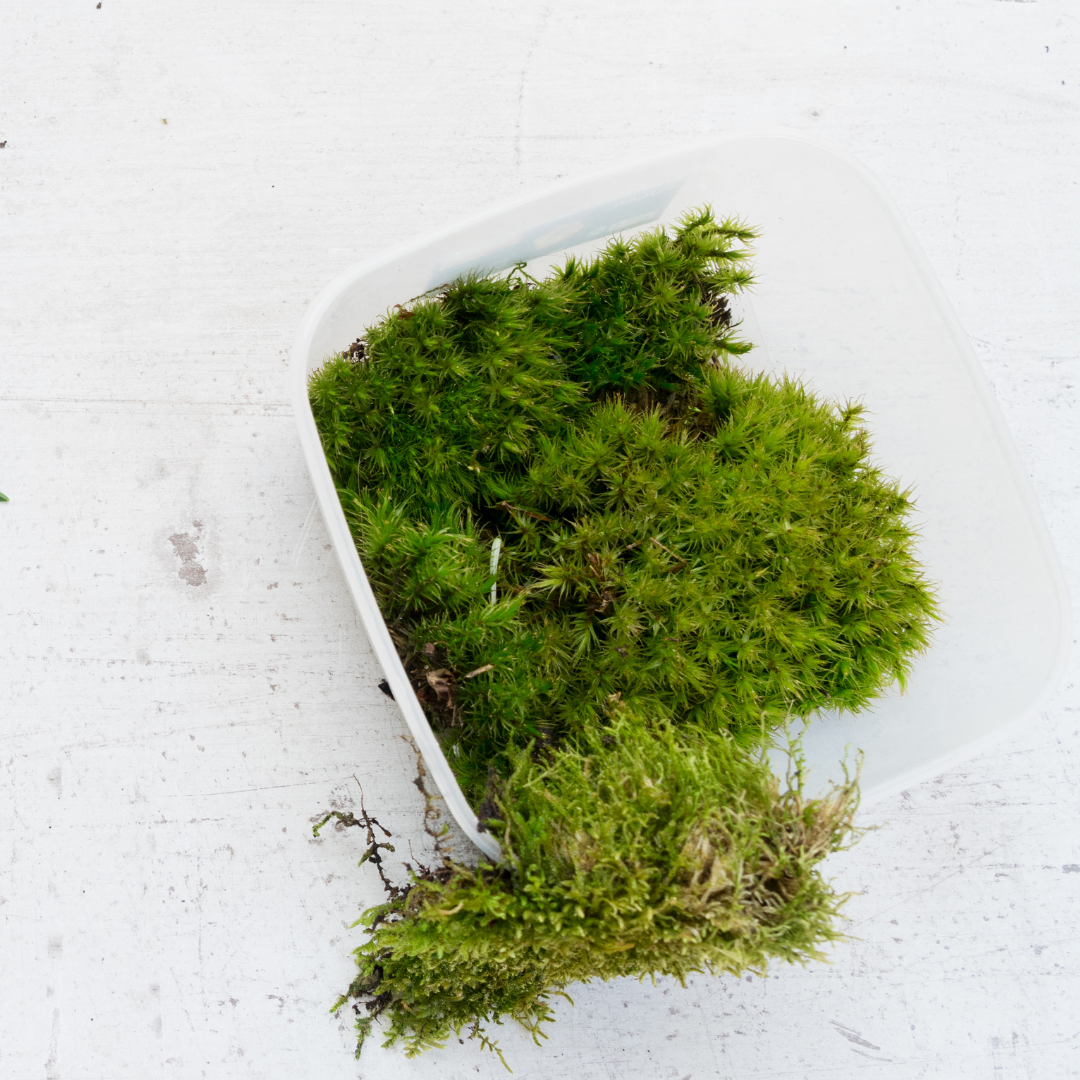
Yes, moss can be a useful indicator. Healthy live moss should usually look fresh and green in a closed terrarium. If it starts to look pale, yellow or dry, the terrarium may need a small amount of water.
However, moss should not be sitting in water. It likes moisture and humidity, but not soggy conditions. If your moss looks dark, slimy or begins to break down, the terrarium may be too wet.

Browse humidity-loving plants and live moss for building or refreshing a closed terrarium.
Shop plants and mossClosed Terrarium Watering FAQs
How often do you water a closed terrarium?
A closed terrarium should not be watered on a strict schedule. Once it has been watered at the beginning, it may not need more water for months. Only add water if the soil, moss or plants show signs of drying.
Can I water my closed terrarium with tap water?
You can use tap water, but filtered water, rain water or distilled water is better. Tap water can leave white mineral marks on the glass over time, especially in hard water areas.
Should a closed terrarium have condensation?
Yes, light condensation is normal. It shows that moisture is cycling inside the terrarium. If the glass is permanently fogged and water is pooling at the bottom, the terrarium may be too wet.
How do I water a terrarium without overwatering it?
Add water slowly and in small amounts. Use a watering bottle, pipette, syringe or fine spray bottle, then wait and observe. Avoid pouring large amounts of water directly into the glass container.
How long can a closed terrarium go without water?
A balanced closed terrarium can often go for a long time without additional watering because it recycles moisture. The exact time depends on the container size, plants, moss, soil and home conditions.
What should I do if my closed terrarium is too wet?
Remove the lid and leave the terrarium open so excess moisture can evaporate. Wipe excess water from the glass if needed, and only close the lid again once the terrarium looks moist rather than waterlogged.
Final Thoughts
Watering a closed terrarium is more about observation than routine. Instead of watering every week, look at the moss, soil, leaves and condensation inside the glass. A balanced closed terrarium should recycle moisture naturally, so small adjustments are usually better than adding too much water at once.
Looking to build your own ecosystem? Browse our DIY closed terrarium kits, care for it with a watering bottle, or refresh your existing terrarium with terrarium plants and moss.




Leave a comment